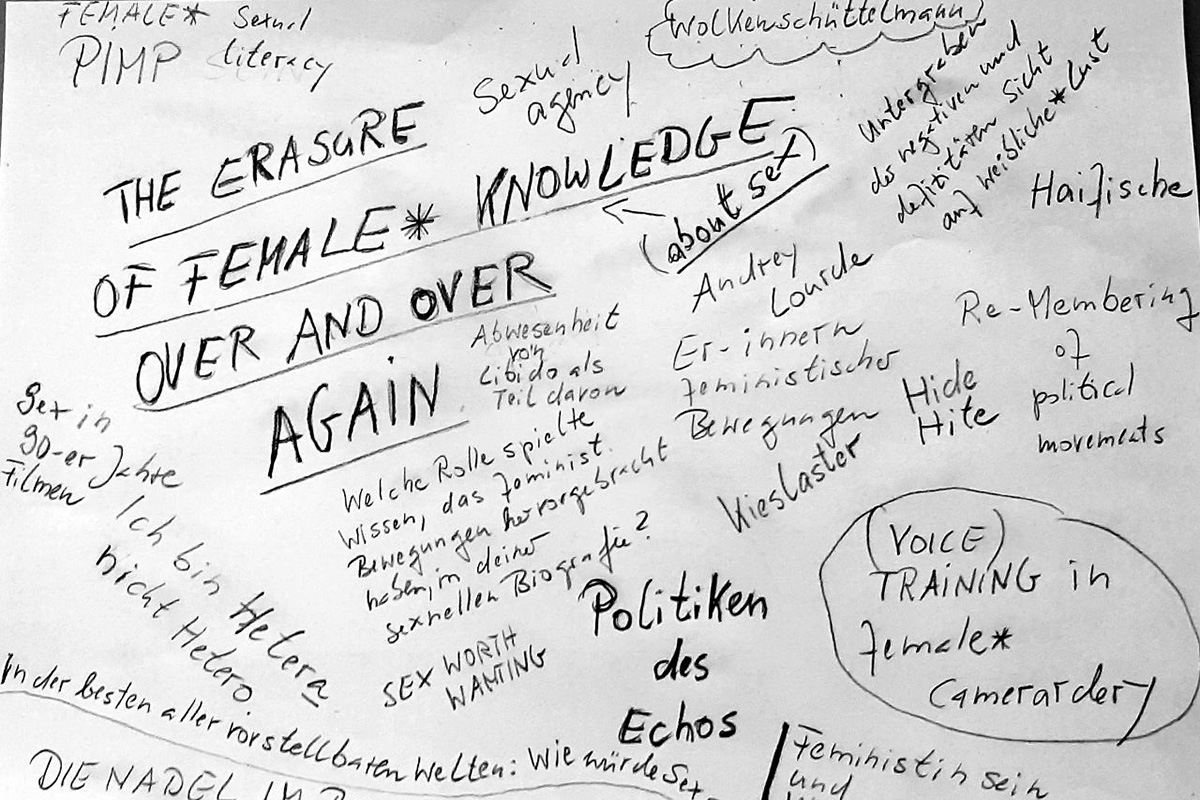
‘Heterasexuality’ refers to women* who desire men but reject the patriarchal interpretation and evaluation of their bodies and needs. Instead, heteras focus on female* pleasure. Heterosexuality is the majority society. Heterasexuality, on the other hand, has no space. It is rarely depicted or described. It is something that is fought for. It is always the result of emancipation. It is electrifying.
I interview women* who have something to say about the patriarchal conditioning of their desire and their body image – as well as about sexual emancipation. A combination of interview research and performative and musical experiments based on this will form the basis for future concert performances. (The asterisk after women* indicates that this refers to all persons who define themselves as women.)
What does it mean to be the echo of others? What does it mean to sing, speak or rap with the voices of those who are absent? What moral questions, what potential transgressions lie in this act of performative representation and unauthorised appropriation? And what empathy, poetry, sensitive permeability and solidarity can be found in it?
Hetera Echo
Format / Year
- A feminist research project between performance and concert/ 2025
Funded by
- City of Vienna Culture (performance work grant for the year 2025)
Photo
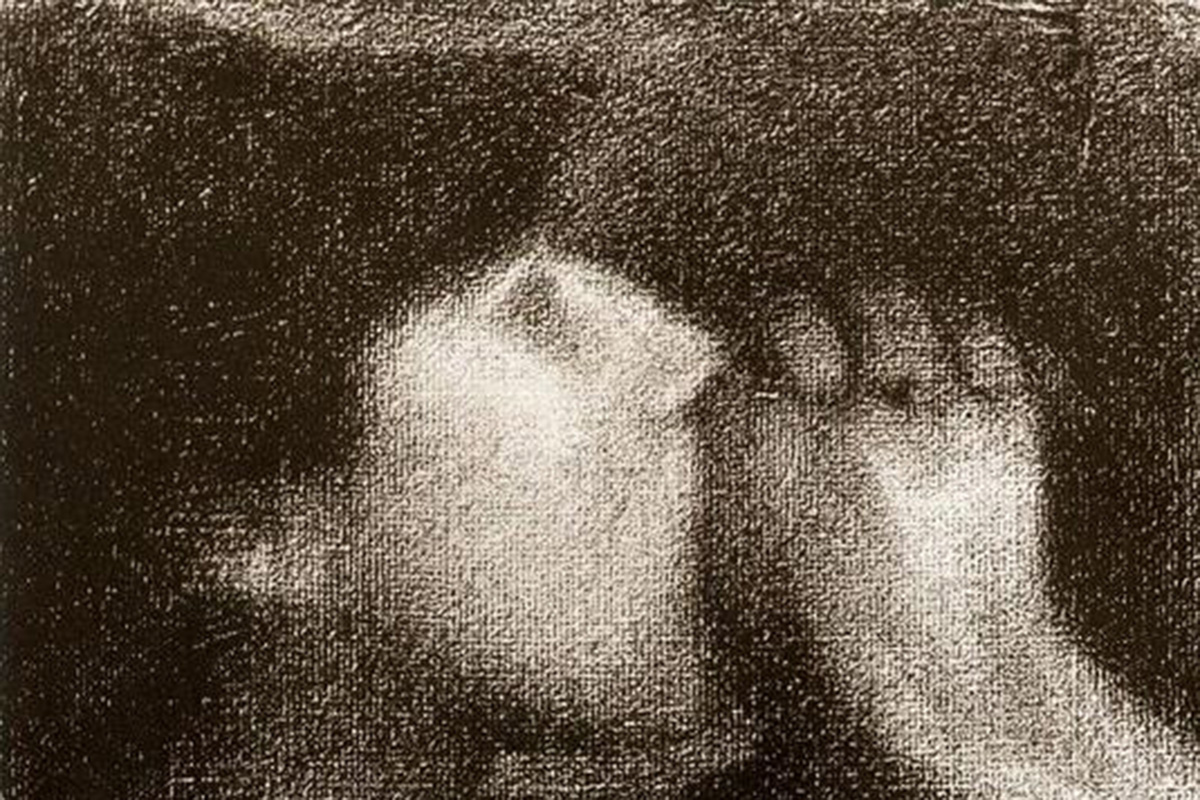
- Painting by Georges Pierre Seurat: The Echo